





The Trusted Partner for Foreign Investors in Vietnam

Production capability

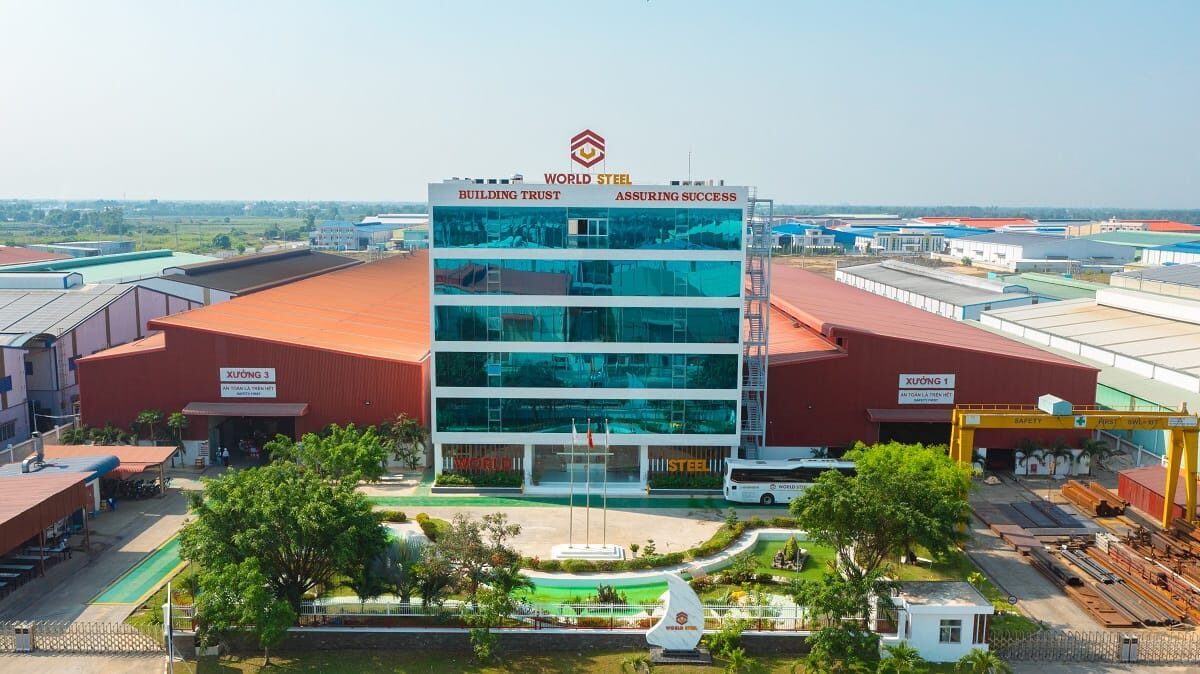
World Steel factory

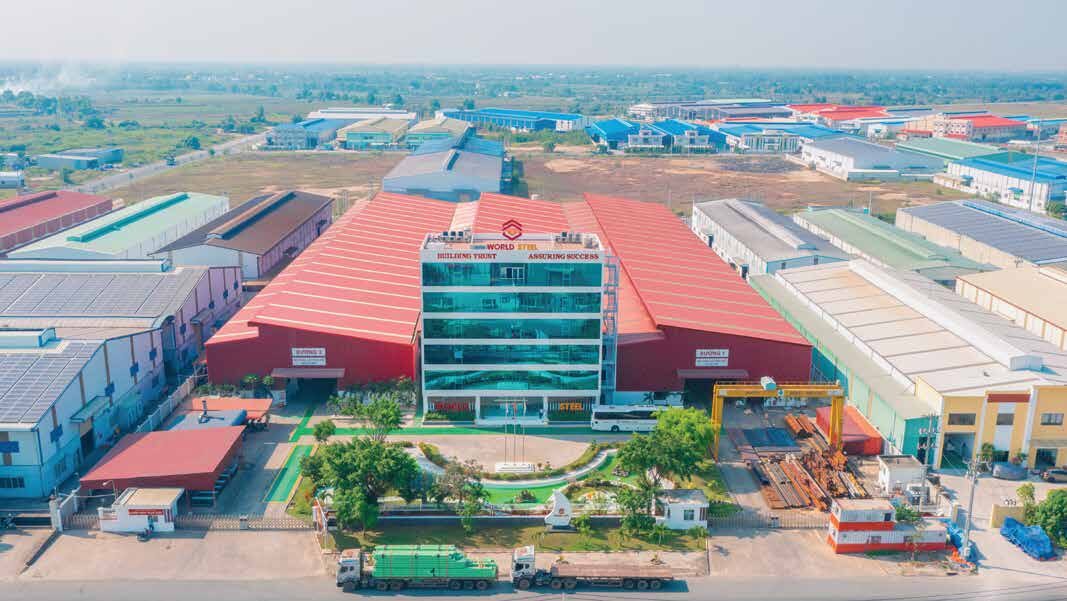
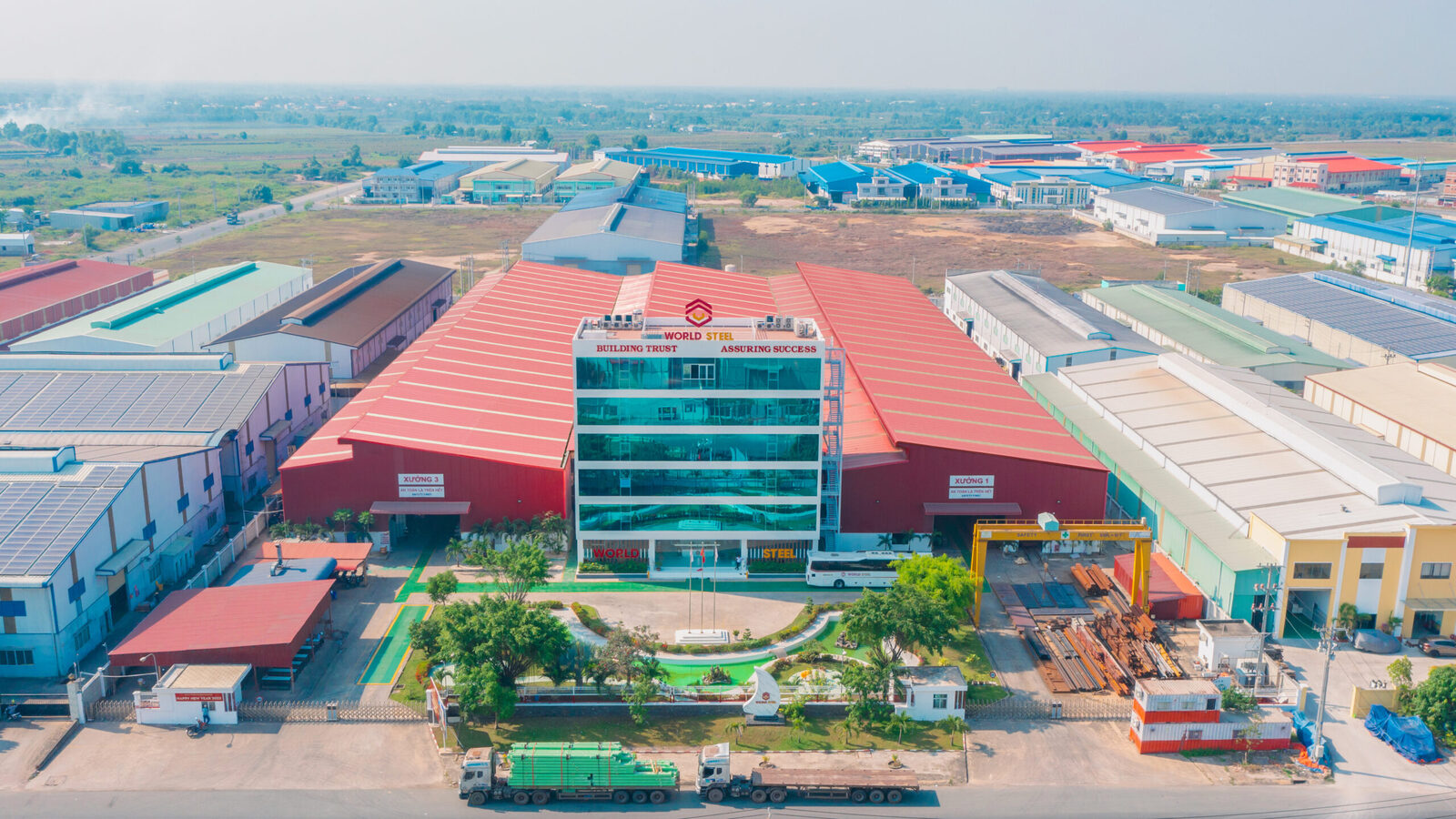
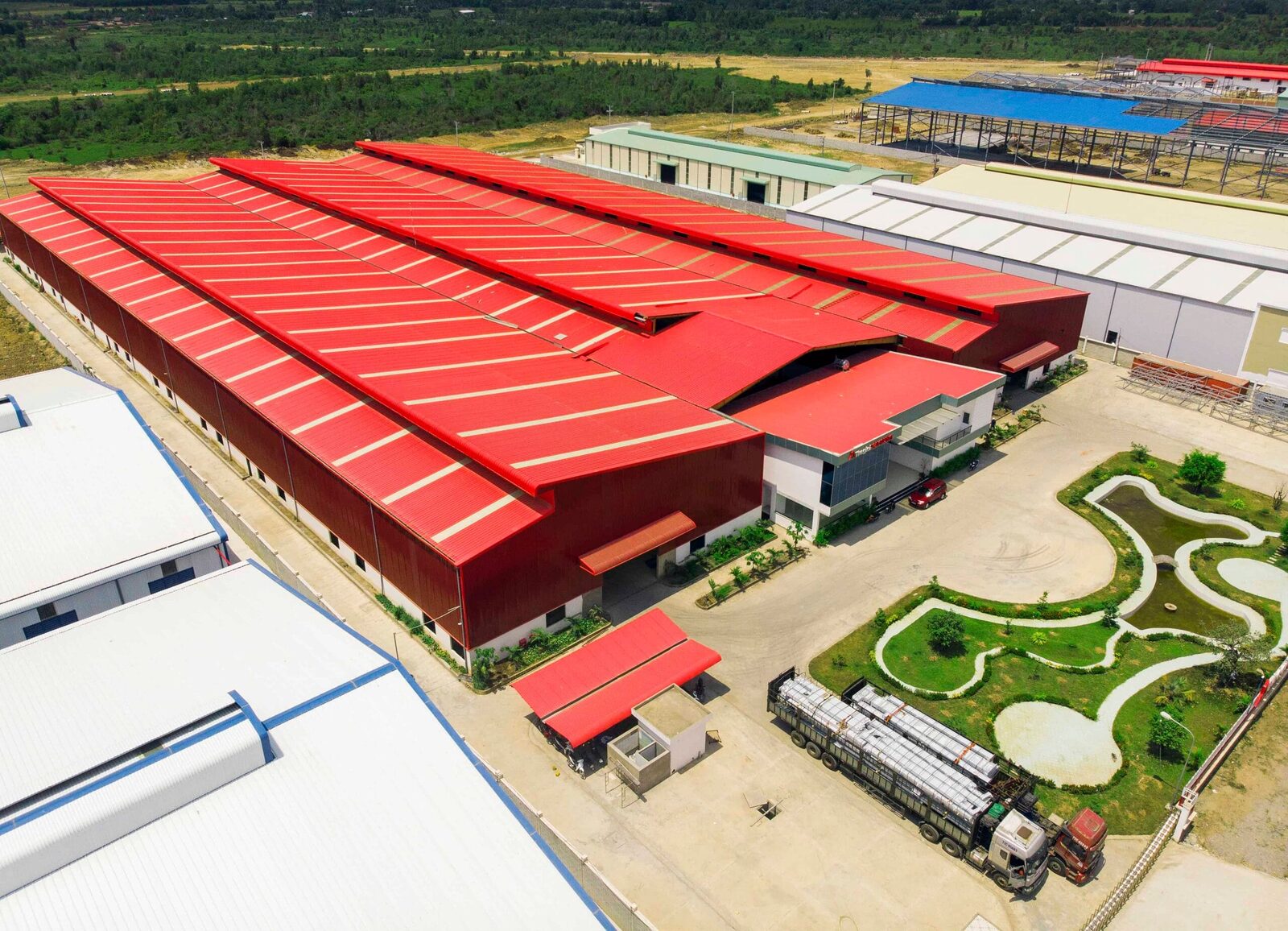
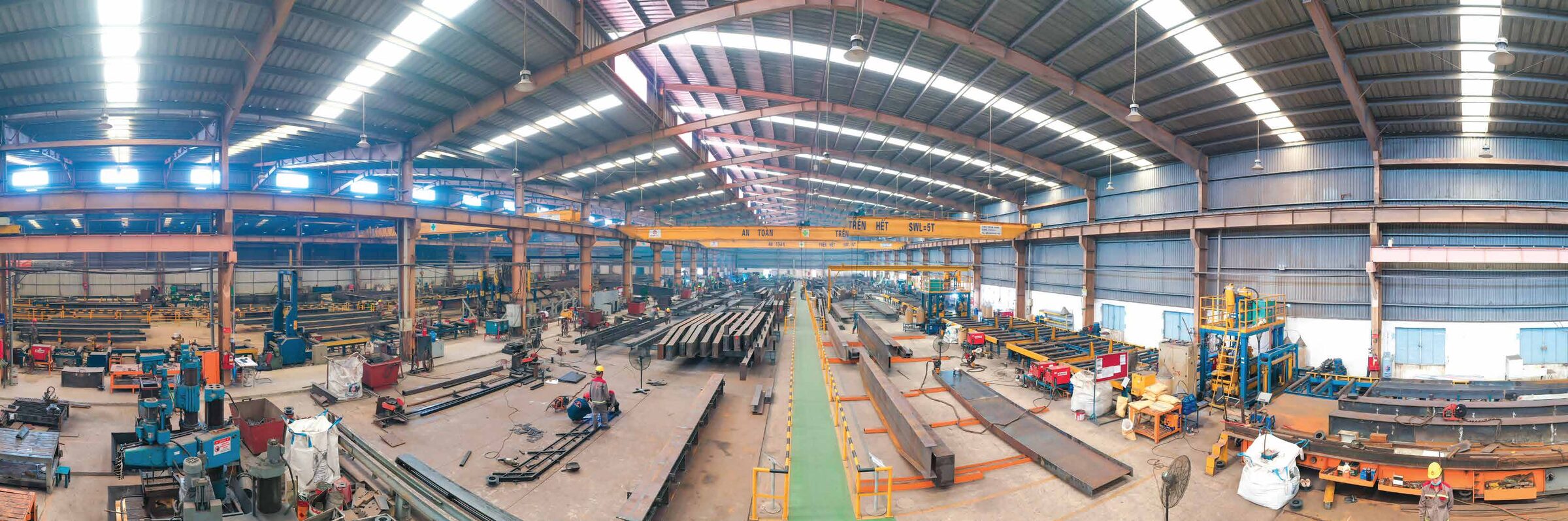
A 20,000 m² steel structure factory at Hai Son Industrial Park, Tay Ninh, producing 2,500 tonnes a month, with every stage inspected by QC for projects in Vietnam and abroad.

Lot Q9-10-15-16, Street No. 7, Hai Son Industrial Park (Phase 3+4), Duc Hoa Commune, Tay Ninh Province, Vietnam

Factory details

World Steel steel structure factory

World Steel Group's steel structure factory is at Lot Q9-10-15-16, Street No. 7, Hai Son Industrial Park (Phase 3+4), Duc Hoa Commune, Tay Ninh Province, Vietnam. The 20,000 m² factory opened in 2016 and produces 2,500 tonnes of steel structures a month.

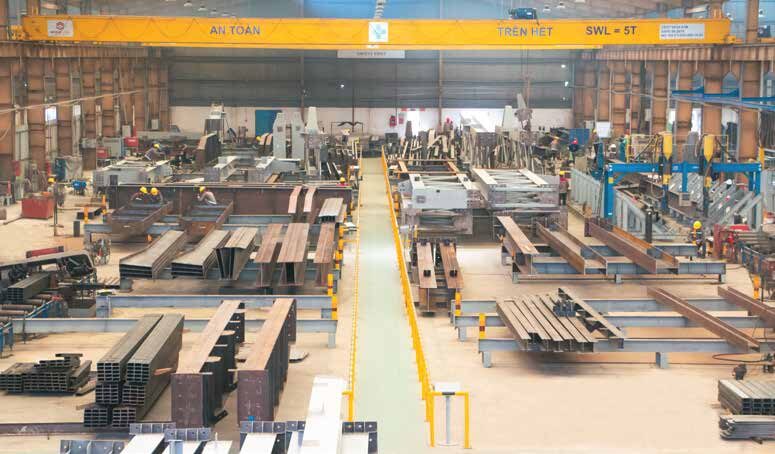
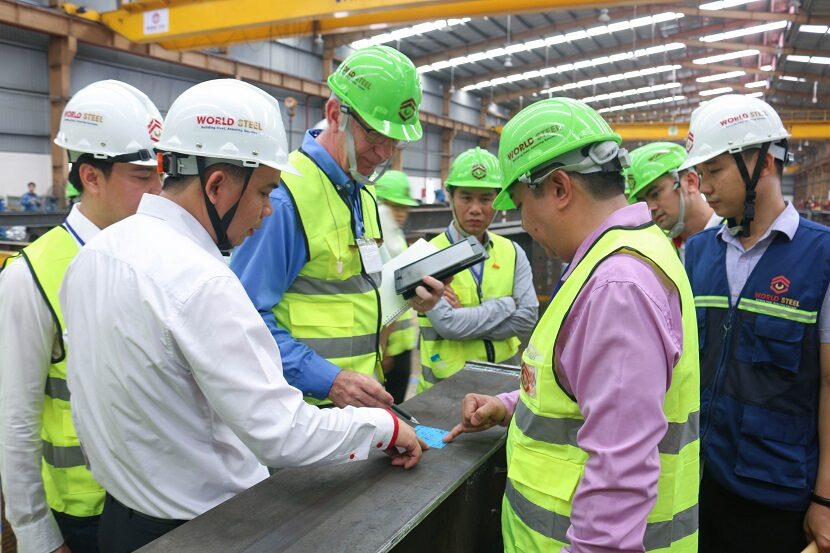
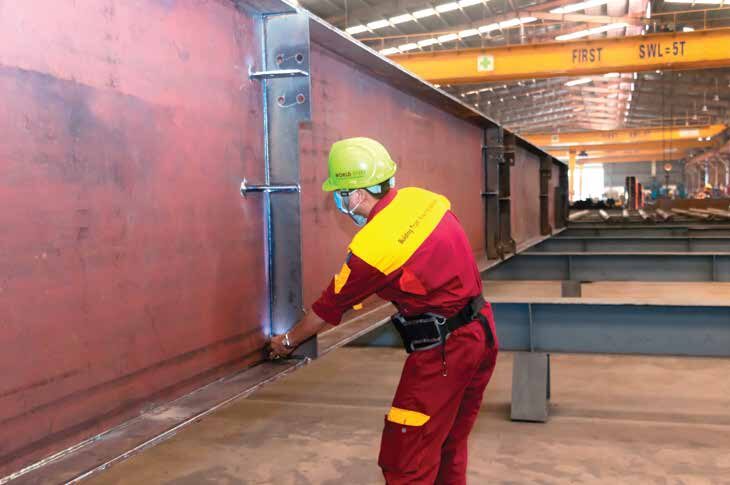
It makes complete sets of components, from the largest members to the smallest parts, from the most complex to the simplest, including oversize and built-up members and special steel structures that are hard to fabricate. Every stage is inspected by QC under our ISO 9001 and IAS AC472 quality management systems.

World Steel steel structure factory
Hai Son IP, Tay Ninh
Factory floor area
20,000 m²
Production halls at Hai Son Industrial Park, Tay Ninh.
Production capacity
2,500 t/month
That is 30,000 tonnes of steel structures a year.
Factory opened
2016
World Steel Group was founded in 2012 and opened its Tay Ninh factory in 2016.
First in Asia
IAS AC472
In 2019 World Steel became the first and only company in Asia to achieve IAS AC472 certification.
Steel structures exported
Since 2019
USA, Australia, Singapore, Thailand, Malaysia, Myanmar, Cambodia, the Philippines and Indonesia.

From plate to member

Steel structure production process

10 stages in the factory, each one checked by QC before the work moves on.

  1. 01

    Raw material input

    Hot-rolled plates and sections with certificates of origin pass QC incoming inspection before production.

  2. 02

    Cutting

    Plates are cut to the shop drawings on CNC plasma & gas, Bodor laser and hydraulic cutting machines.

  3. 03

    Plates and details

    CNC drilling, punching and marking of end plates, stiffeners and connection parts.

  4. 04

    Beam welding

    H-beams are fitted up and welded on the automated beam welding line and gantry welding machines.

  5. 05

    Straightening

    The beam straightening machine corrects flange distortion after welding.

  6. 06

    Assembly

    Plates, stiffeners and details are fitted to each member to the drawings and checked by QC before welding.

  7. 07

    Detail welding

    Full welding of all detail joints, visual weld inspection and non-destructive testing (UT, MT).

  8. 08

    Shot blasting and cleaning

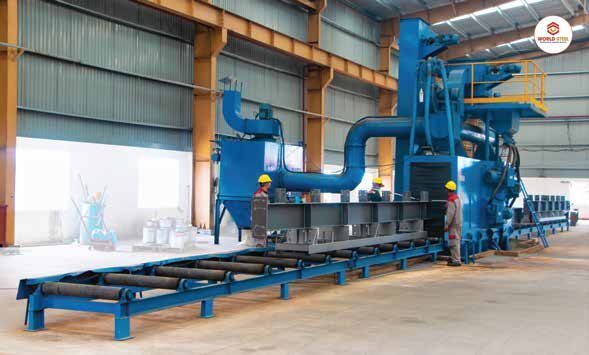
    Surfaces are cleaned in the shot blasting machine before painting.

  9. 09

    Painting and part marking

    Painting to the project paint system, QC paint inspection and member codes for traceability.

  10. 10

    Delivery

    Members are loaded by code and delivered to site or to the export port.

Technical equipment system

Equipment capability

Cutting, drilling, welding, straightening and shot blasting machines for every production stage.

  • Hydraulic cutting machine

    Cutting

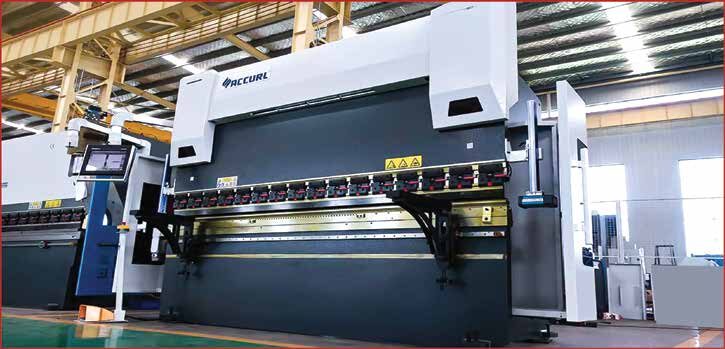
    Hydraulic cutting machine

    Cuts steel plates and parts to size.

  • CNC plasma & gas cutting machine

    Cutting

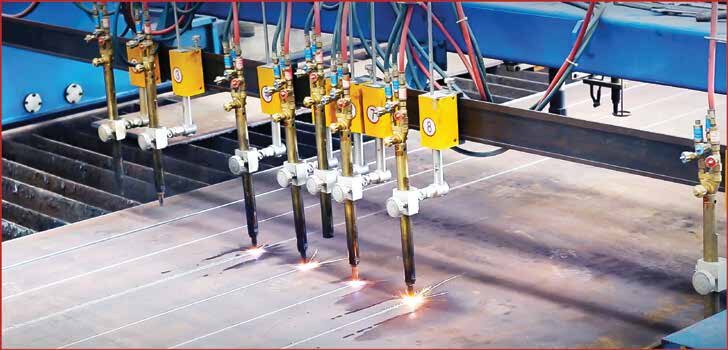
    CNC plasma & gas cutting machine

    CNC profile cutting of heavy plates.

  • Bodor laser cutting machine

    Cutting

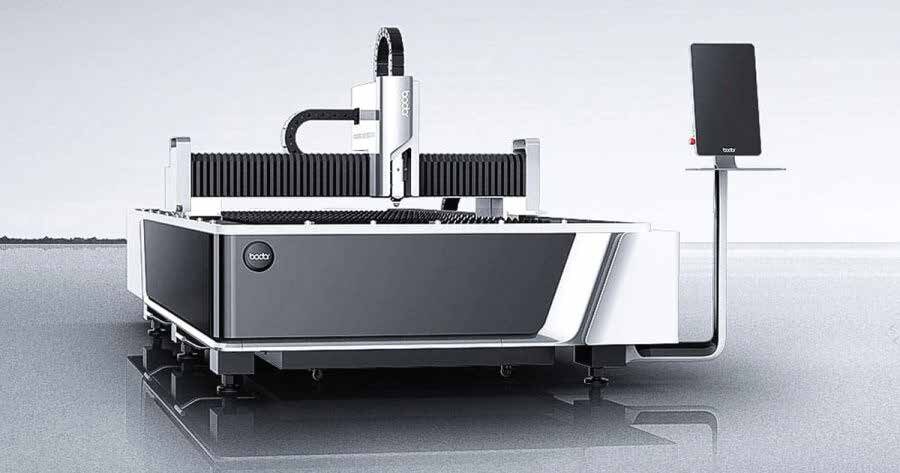
    Bodor laser cutting machine

    Precise laser cutting of plates and parts.

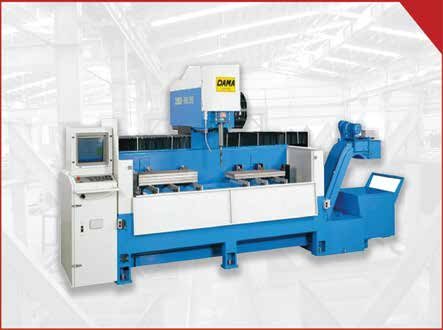
  • CNC drilling machine

    Plates and details

    CNC drilling machine

    Drills bolt holes in plates and members.

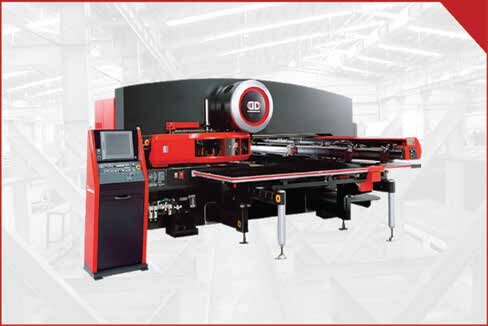
  • Punching machine

    Plates and details

    Punching machine

    Punches holes in series for plates and connection parts.

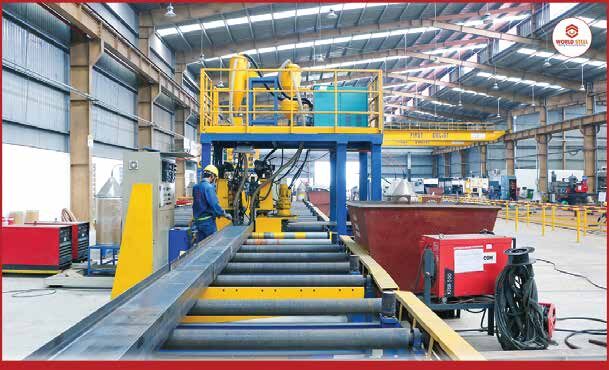
  • Automated beam welding line

    Beam welding

    Automated beam welding line

    Fit-up and welding of H-beams.

  • Gantry beam welding machine

    Beam welding

    Gantry beam welding machine

    Welds built-up beams on a gantry frame.

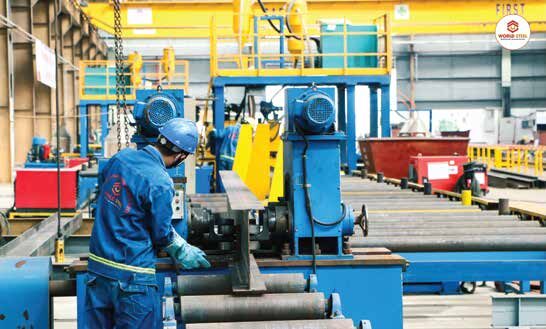
  • Beam straightening machine

    Straightening

    Beam straightening machine

    Corrects flange distortion after welding.

  • Shot blasting machine

    Surface preparation

    Shot blasting machine

    Cleans member surfaces before painting.

QA/QC in the factory

Quality control process

Every stage has a QC inspection point; a member moves on only when it passes.

Fabrication and inspection flow chart

  1. 1

    Accepted raw materials

    Hot-rolled plates are inspected and accepted before production.

  2. 2

    Cutting, shearing, drilling

    Inspection after cutting, shearing and drilling.

    QC003

  3. 3

    H-beam fit-up and welding

    Inspection after H-beam fit-up and welding.

  4. 4

    Fit-up of all parts and assembly

    Inspection after all parts are fitted to the member.

    QC004

  5. 5

    Full welding

    Visual welding inspection and NDT (UT, MT...), final inspection.

    QC005 · QC009 · QC010

  6. 6

    Surface preparation

    Inspection after sand or shot blasting.

  7. 7

    Painting

    Paint inspection.

    QC006

  8. 8

    Dispatch

    Members that pass every inspection point leave the factory.

Quality inspection process

  1. 01Incoming material inspection
  2. 02Drilling and cutting stage inspection
  3. 03Final assembly stage inspection
  4. 04Detail welding stage inspection
  5. 05Cleaning stage inspection
  6. 06Painting stage inspection
  7. 07Component coding system
Quality control rules

Quality control rules

  • Every production stage is inspected by QC.
  • A stage that fails is reworked and inspected again before the member moves on.
  • When a defect or non-conformity appears, QC tags the member Hold and raises an NCR.

NCR
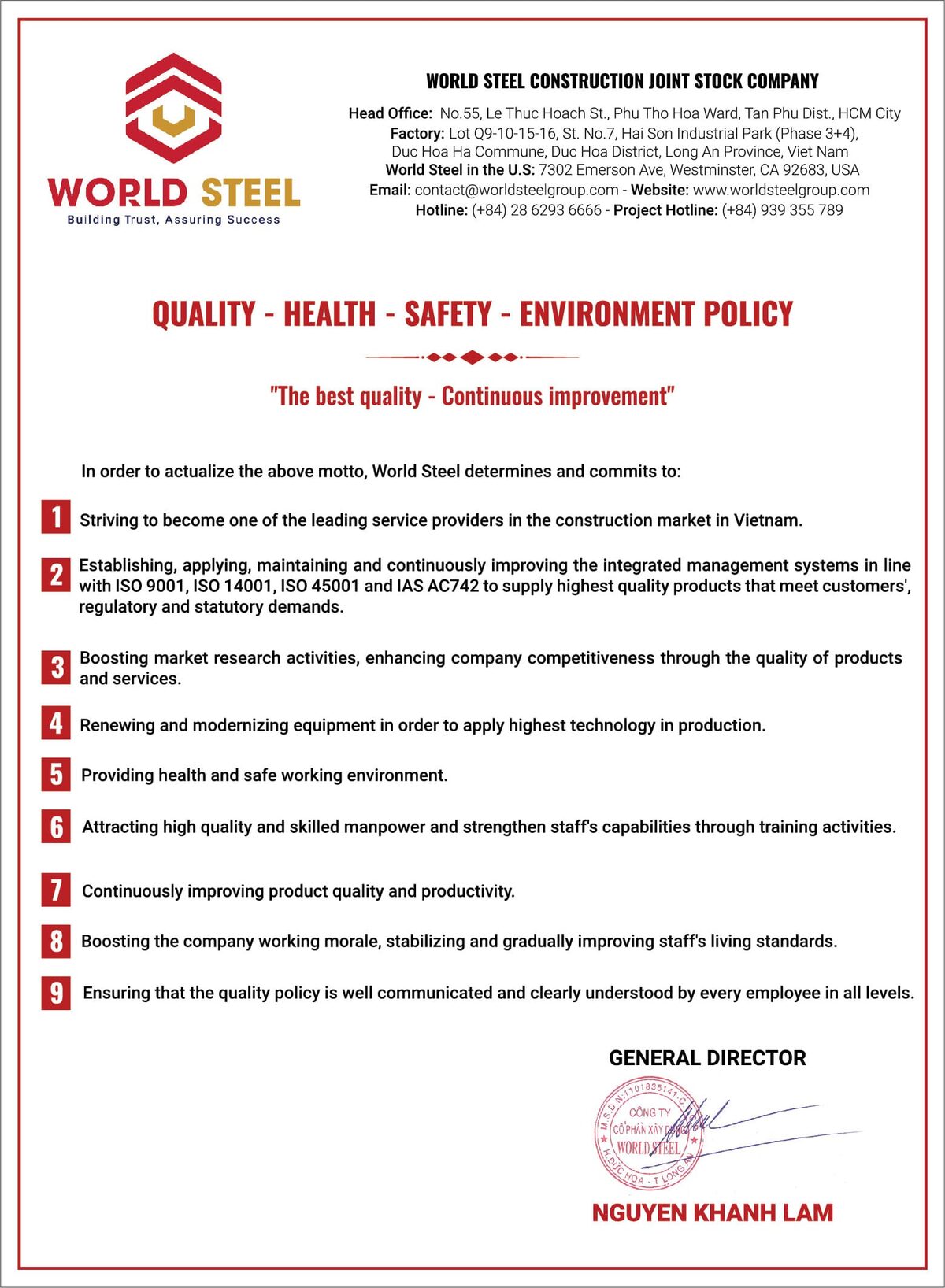
Quality and safety policy

Quality and safety policy

Striving to become one of the leading service providers in the construction market in Vietnam.

  • Establish, apply, maintain and continuously improve the integrated management system to ISO 9001, ISO 45001:2018 and AC472.
  • Renew and modernise equipment to bring high technology into manufacturing.
  • Provide a safe and healthy working environment.
  • Attract skilled people and build their capabilities through training.
  • Continuously improve product quality and productivity.

ISO 9001 · ISO 45001 · AC472

International standards

Fabrication standards

Design, fabrication and materials to US, European, Australian and Japanese standards, with international certifications.

View certificates

Design standards

  • IBC 2024International Building Code
  • AISC 360-22Specification for structural steel buildings
  • AISI S100-2020Design of cold-formed steel structural members
  • ASCE/SEI 7-22Minimum design loads for buildings and other structures
  • MBMA 2018Metal building systems manual
  • AWS D1.1/D1.1M:2020Structural welding code – steel

Factory certificates

  • ISO 9001:2015Quality management system
  • ISO 14001:2015Environmental management system
  • ISO 45001:2018Occupational health and safety management system
  • ISO 3834-2:2021Quality requirements for fusion welding
  • EN 1090-1:2009+A1:2011Execution of steel structures, European standard
  • AS/NZS 5131:2016Structural steelwork fabrication and erection (Australia, New Zealand)
  • IAS AC472Inspection programme for structural steel fabricators (USA)

Materials and material standards

Material sourcing

  • Raw materials are reliably sourced from Europe, Japan, Korea, Taiwan...
  • Raw materials always have a certificate of genuine origin.
  • Raw materials conform to ASTM standards and other standards such as BS and JIS.

Hot-rolled plates and sections

  • ASTM A572/A572M
  • ASTM A36/A36M
  • AS/NZS 3678
  • AS/NZS 3679.1
  • AS/NZS 1594
  • EN 10025
  • JIS G3101
  • JIS G3106
  • JIS G3136
  • GB/T 1591
  • GB/T 700

Pipes and hollow sections

  • ASTM A500/A500M
  • ASTM A53/A53M
  • AS/NZS 1163
  • EN 10219
  • EN 10210
  • JIS G3444
  • JIS G3466
  • GB/T 700

Purlins, sheeting and decking

  • AS 1397
  • AS/NZS 2728
  • JIS G3350

Bolts, nuts and washers

  • ASTM F3125/F3125M
  • ASTM A563/A563M
  • ASTM F436/F436M
  • EN 14399
  • AS/NZS 1252.1
  • AS 1112
  • AS 1237.1
  • JIS B1180
  • JIS B1181
  • JIS B1256
  • DIN 933
  • DIN 934
  • DIN 125
  • DIN 127

Stainless steel

  • ASTM/ASME A/SA-276
  • ASTM/ASME A/SA-312

Material certification on request

Depending on the project or the client, materials may need one of these certifications (to be checked for each case):

  • BSI Benchmark
  • FPC-BC1
  • EN 10204 3.1
  • CE marking
  • JIS Mark